แนะรัฐเดินหน้าเทคโนโลยีใหม่ต่อยอดอุตสาหกรรมเอทานอล-ไบโอดีเซลสู่ผู้นำเศรษฐกิจสีเขียว
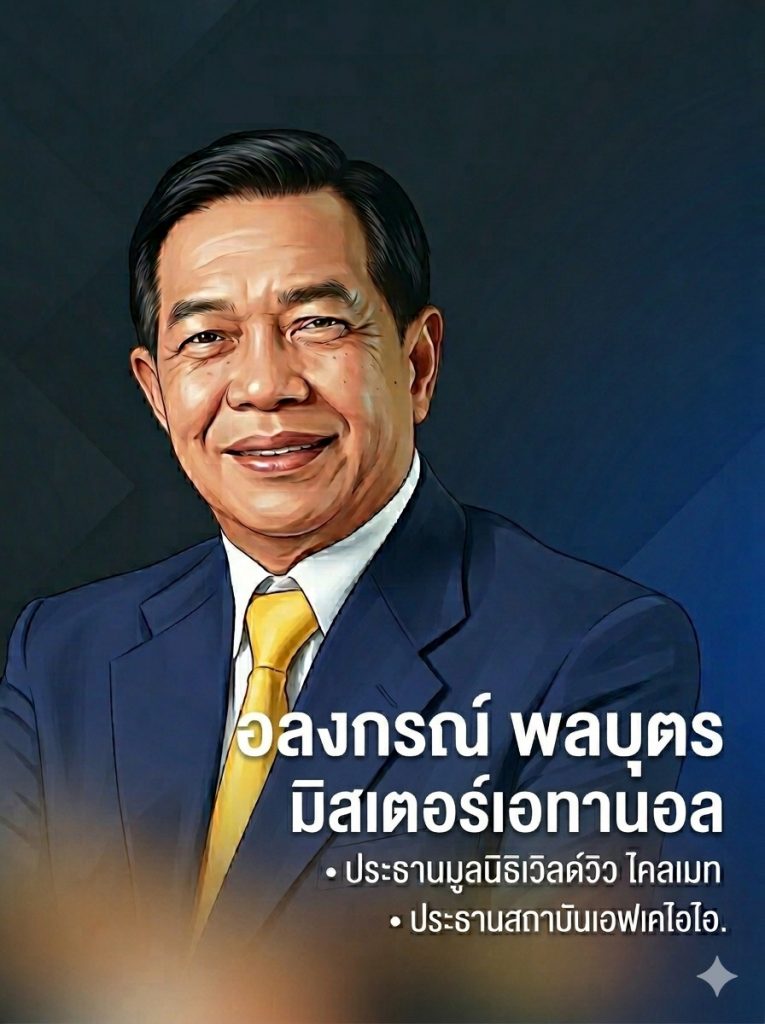
นายอลงกรณ์ พลบุตร ประธานสถาบันเอฟเคไอไอ. (FKII) ผู้ก่อตั้งมูลนิธิสถาบันพลังงานทางเลือกแห่งประเทศไทย ประธานมูลนิธิเวิลด์วิว ไคลเมท (Worldview Climate Foundation) เจ้าของฉายา”มิสเตอร์เอทานอล“เปิดเผยวิสัยทัศน์การยกระดับอุตสาหกรรมพลังงานชีวภาพผ่านบทความ “นวัตกรรมน้ำมันจากอากาศ (Air-to-Fuel): เทคโนโลยีใหม่สู่เศรษฐกิจสีเขียว” ในเฟสบุ้ควันนี้เกี่ยวกับเทคโนโลยีและนวัตกรรมใหม่ล่าสุดของวงการพลังงานโลกที่สามารถเปลี่ยนอากาศเป็นน้ำมันเชื้อเพลิง(Air-to-Fuel)ได้สำเร็จโดยชี้แนะภาครัฐเดินหน้าเทคโนโลยีใหม่ต่อยอดอุตสาหกรรมเอทานอล-ไบโอดีเซลสู่เศรษฐกิจสีเขียวอย่างยั่งยืนซึ่งประเทศไทยมีศักยภาพสูงมากนับเป็นบทความที่น่าสนใจโดยมีเนื้อหาดังนี้
“นวัตกรรม”น้ำมันจากอากาศ”(Air-to-Fuel): เทคโนโลยีใหม่สู่เศรษฐกิจสีเขียว” โดย นายอลงกรณ์ พลบุตร มิสเตอร์เอทานอล ประธานสถาบันเอฟเคไอไอ. (FKII) ผู้ก่อตั้งมูลนิธิสถาบันพลังงานทางเลือกแห่งประเทศไทย ประธานมูลนิธิเวิลด์วิว ไคลเมท (Worldview Climate Foundation) ในยุคที่โลกและประเทศไทยกำลังเผชิญกับวิกฤตการเปลี่ยนแปลงสภาพภูมิอากาศ (Climate Change) และวิกฤตพลังงานจากสงคราม
การปรับเปลี่ยนโครงสร้างพลังงานจากการพึ่งพาพลังงานฟอสซิลไปสู่ “พลังงานสะอาด” ไม่ใช่เพียงแค่ทางเลือก แต่คือทางรอดและภารกิจสำคัญของประเทศไทยในห้วงเวลาที่กำลังขับเคลื่อนยุทธศาสตร์เศรษฐกิจสีเขียว( Green Economy )เพื่อบรรลุเป้าหมายคาร์บอนเป็นศูนย์( Net Zero )
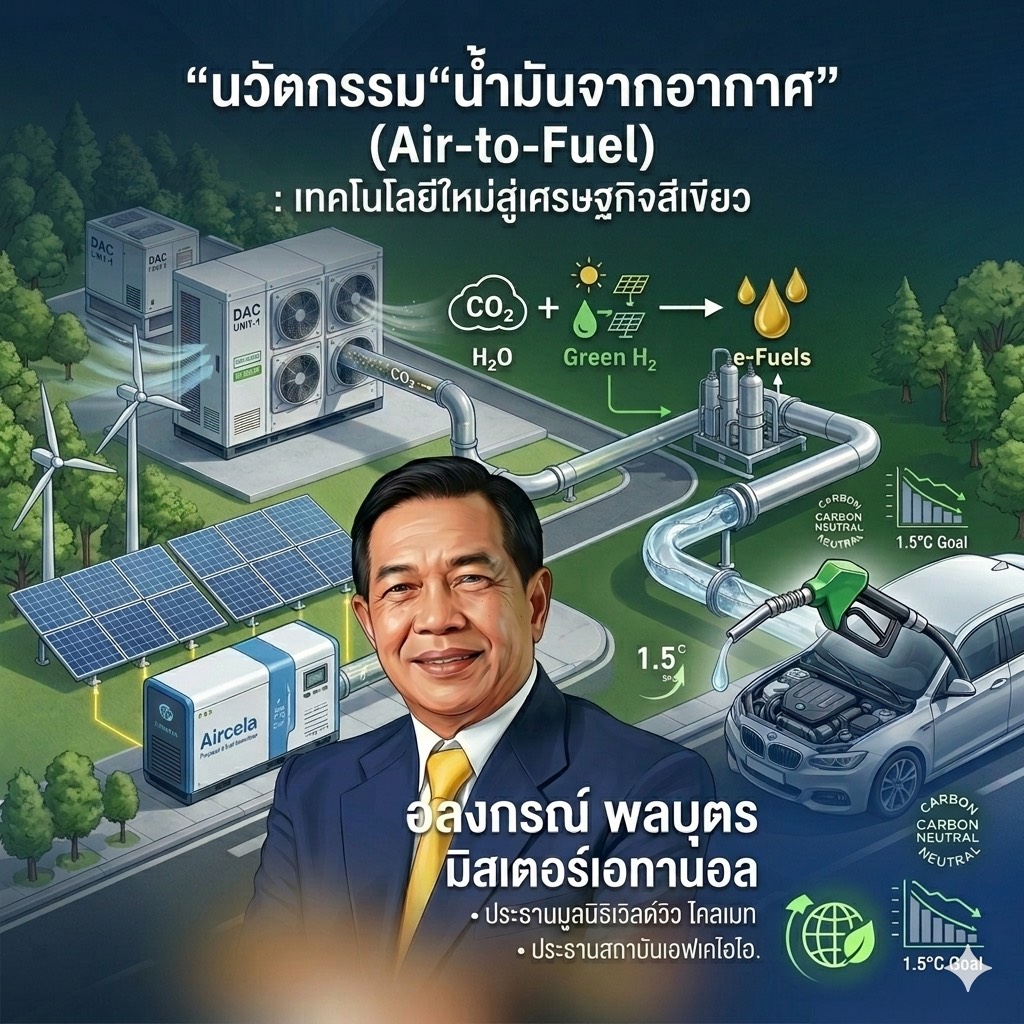
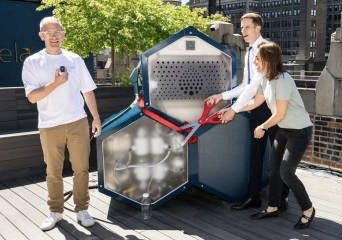
ผมขอนำเสนอหนึ่งในนวัตกรรมที่กำลังถูกจับตามองอย่างมากในระดับสากล นั่นคือเทคโนโลยี “Air-to-Fuel” หรือการผลิตน้ำมันจากอากาศ เทคโนโลยีและนวัตกรรมใหม่ของบริษัทสตาร์ทอัพ”Aircela“ในอเมริกาได้พิสูจน์ให้เห็นว่า “อากาศที่เราหายใจ” สามารถแปรสภาพเป็น “น้ำมันเบนซินสังเคราะห์” ได้สำเร็จแม้เครื่องรุ่นแรกขนาดเท่าตู้เย็นยังมีกำลังการผลิตได้ไม่มากและกำลังขยายกำลังการผลิตเพิ่มขึ้นซึ่งทำได้ไม่ยากแต่สิ่งสำคัญคือเทคโนโลยีนี้ทำได้จริงโดยใช้กระบวนการที่เรียกว่า Direct Air Capture (DAC) ผสานกับพลังงานหมุนเวียน ซึ่งมีกระบวนการสำคัญ 3 ประการ
1.การดักจับคาร์บอน (CO2): เครื่องจะดูดอากาศเพื่อสกัดก๊าซคาร์บอนไดออกไซด์และน้ำ (H2O) ออกมาโดยตรง
2.ผลิตพลังงานสะอาด (Green Hydrogen)ใช้กระแสไฟฟ้าจากโซลาร์เซลล์มาแยกน้ำเพื่อสร้างไฮโดรเจน
3.กระบวนการสังเคราะห์
โดยนำคาร์บอนไดออกไซด์(Co2และไฮโดรเจนมาผ่านปฏิกิริยาเคมีจนได้เป็นน้ำมันเบนซินที่มีความบริสุทธิ์สูงและพร้อมใช้งานทันที
นวัตกรรมนี้คือตัวอย่างที่ชัดเจนของ Circular Economy เพราะน้ำมันที่ผลิตได้คือ “Net-Zero Gasoline” เมื่อเราเติมในรถยนต์เครื่องยนต์สันดาป (ICE) ก๊าซ CO2 ที่ปล่อยออกจากท่อไอเสียจะมีปริมาณเท่ากับก๊าซที่เครื่องผลิตดักจับมาจากอากาศในตอนแรกจึงไม่มีการเพิ่มก๊าซเรือนกระจกใหม่เข้าสู่ชั้นบรรยากาศ ยิ่งกว่านั้นในฐานะที่ผมทำงานด้านเชื้อเพลิงชีวภาพมาอย่างต่อเนื่อง ผมเห็นว่า Air-to-Fuelจะช่วย”เติมเต็ม” และ“ต่อยอด”ร่วมกับเอทานอล(E100) หรือน้ำมันไบโอดีเซล (B100) เพื่อสร้างเชื้อเพลิงสังเคราะห์ (Synthetic Fuels) ที่ตอบโจทย์ทั้งภาคการขนส่งทางบกและน้ำมันเชื้อเพลิงอากาศยานแบบยั่งยืน (SAF)
นอกจากนี้ การพัฒนาเศรษฐกิจในระดับท้องถิ่นและชุมชนบนหลักการกระจายฐานเศรษฐกิจ (Decentralized) คือรากฐานสำคัญจึงควรส่งเสริมการผลิตระดับครัวเรือน วิสาหกิจชุมชนและธุรกิจเอสเอ็มอี.โดยการติดตั้งระบบผลิตน้ำมันจากอากาศใช้พลังงานโซลาร์เซลล์เพื่อผลิตน้ำมันใช้เองในบ้านหรือชุมชนทั่วประเทศซึ่งช่วยลดต้นทุนการเดินทางและการขนส่งทั้งยังสร้างความมั่นคงทางพลังงานในระดับชุมชนอีกด้วย
บทสรุป
โลกในวันข้างหน้าจะเป็นโลกของ Green Innovation ซึ่งเทคโนโลยี Air-to-Fuel สามารถเปลี่ยนก๊าซคาร์บอนในอากาศให้เป็นน้ำมันเชื้อเพลิงได้สำเร็จ ทั้งนี้ประเทศไทยต้องเร่งส่งเสริมการวิจัยและพัฒนา (R&D) เทคโนโลยีเหล่านี้เพื่อสร้างนวัตกรรมของตัวเอง หากเราก้าวทันโลกและกล้าที่จะเปลี่ยน เราจะเป็นผู้นำเศรษฐกิจสีเขียวแห่งอนาคตอย่างแน่นอนครับ.
https://www.instagram.com/reels/C1XeECjvuJX/
“Mr. Ethanol” is an innovative production of “air-to-fuel” (air-to-fuel).
Introducing the new technology to expand the ethanol-biodiesel industry to lead the green economy.
Mr. Alongkorn Ponlaboot, President of FKI Institute. (FKII), founder of the Thailand Alternative Energy Institute Foundation, president of the Worldview Climate Foundation, nicknamed the “Mr. Ethanol,” revealed his vision to raise the bioenergy industry through the article “Air-to-Fuel: New Technology to Green Economy.” Today’s Facebook page is about the latest technologies and innovations in the world energy industry that successfully transform air-to-fuel. The government is introducing new technologies to expand the ethanol-biodiesel industry to a sustainable green economy. Thailand has great potential. It is an interesting article with the following contents.
“Innovation” (Air-to-Fuel): New Technology to Green Economy” by Mr. Alongkorn Ponlaboot, Mr. Ethanol, President of FKI Institute. (FKII), founder of the Thailand Alternative Energy Foundation, president of the Worldview Climate Foundation, in an era when the world and Thailand are facing climate change and war energy crisis.
The transformation of energy structure from fossil energy dependence to “clean energy” is not only an option but Thailand’s salvation and mission at a time when it is driving the Green Economy strategy to achieve the goal of carbon zero.
I present one of the innovations that is being watched internationally, which is the “Air-to-Fuel” technology, the technology and innovation of American startup “Aircela” has proven that “air we breathe” can transform into “synthetic gasoline.” The first generation of refrigerator-sized machines has little capacity and are growing more capacity. It is important that this technology is realized using a process called Direct Air Capture (DAC) combined with renewable energy, which has three key processes.
1. Carbon Capture (CO2): The machine absorbs air to extract carbon dioxide and water (H2O) directly.
2. Green Hydrogen uses electricity from solar cells to separate water to create hydrogen.
3. Synthetic process
Carbon dioxide (Co2 and hydrogen) are chemically treated to form a high purity gasoline that is ready for immediate use.
This innovation is a clear example of Circular Economy. The oil produced is “Net-Zero Gasoline.” When we add an ICE car, the amount of CO2 emitted from the exhaust pipe is equal to the gas captured by the air. At first, no new greenhouse gas is added to the atmosphere. Furthermore, as I’ve been working on biofuels, I see Air-to-Fuel will “fill” and “extend” with ethanol (E100) or B100 to create synthetic fuels that meet both the land transport and sustainable aviation fuel (SAF) requirements.
In addition, economic development at the local and community levels based on the principle of decentralized economy should be promoted at the household level, community enterprises and SMEs. Solar-cell air fuel production systems will be installed to produce fuel for home and communities across the country, reducing travel and transportation costs and creating energy security at the community level.
The conclusion.
The next world will be Green Innovation, where Air-to-Fuel technology successfully transforms carbon into fuel. Thailand must accelerate its R&D efforts to innovate. If we keep pace with the world and dare to change, we will definitely lead the green economy of the future. .