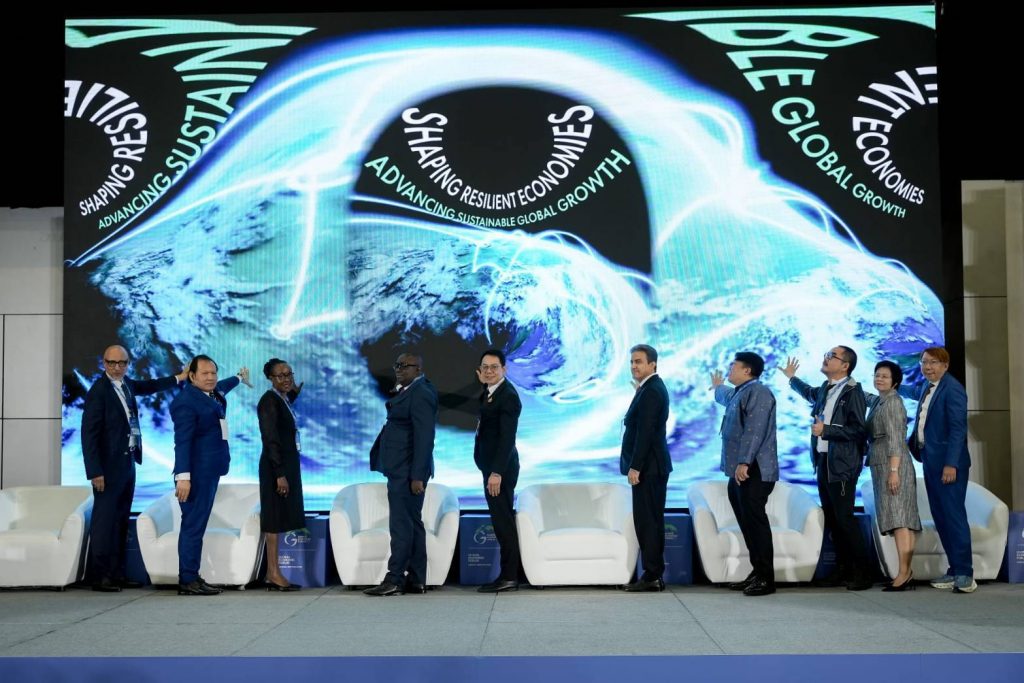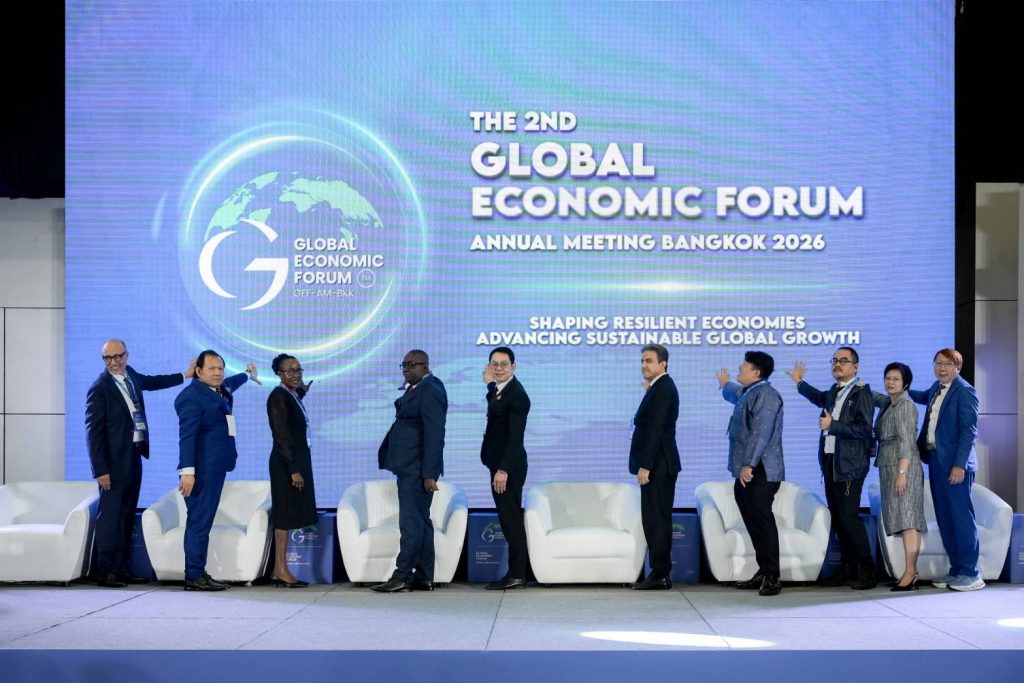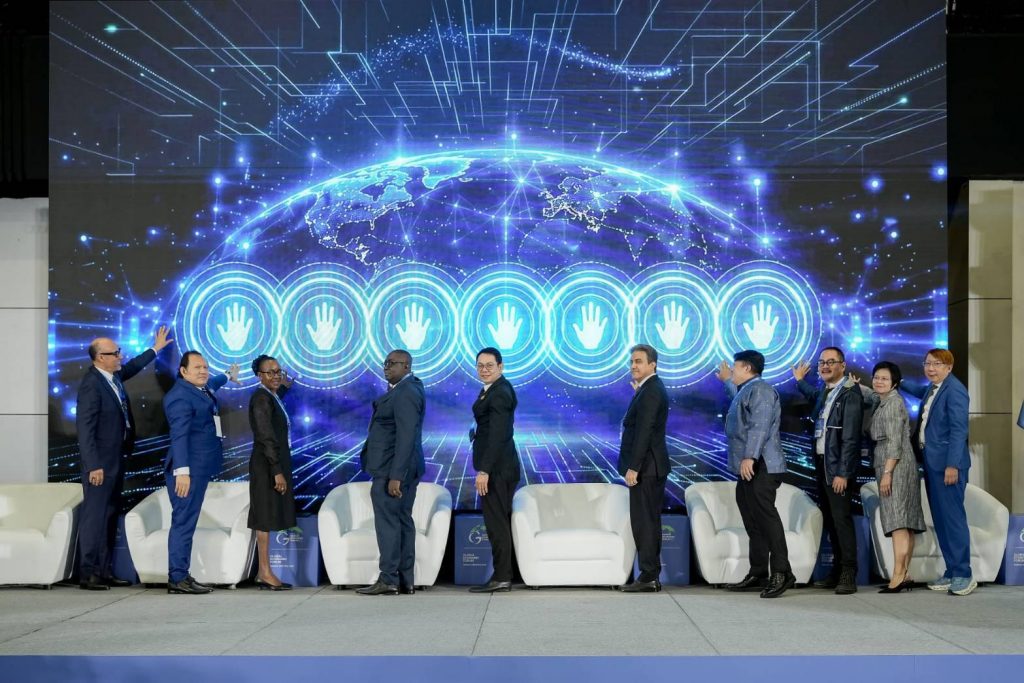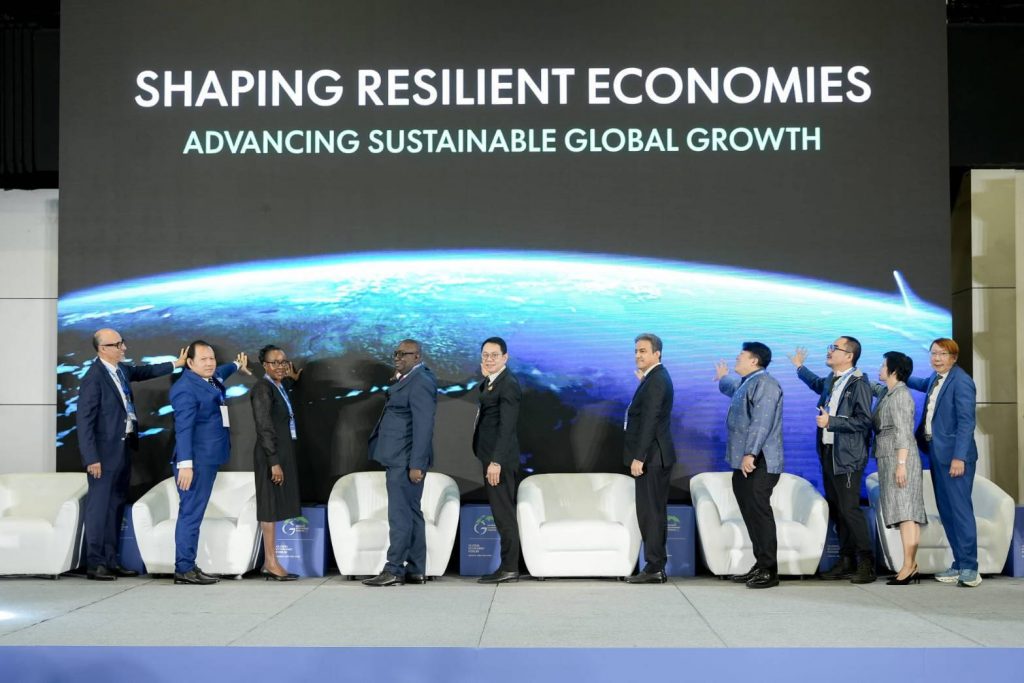
Thailand’s Deputy Transport Minister outlines infrastructure-led growth priorities; former Thai Minister highlights ASEAN’s diversity as a global wellness advantage; international leaders call for investable smart cities, sustainable capital, reduced economic fragmentation and stronger cross-border collaboration.
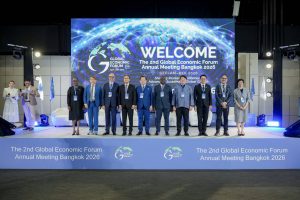
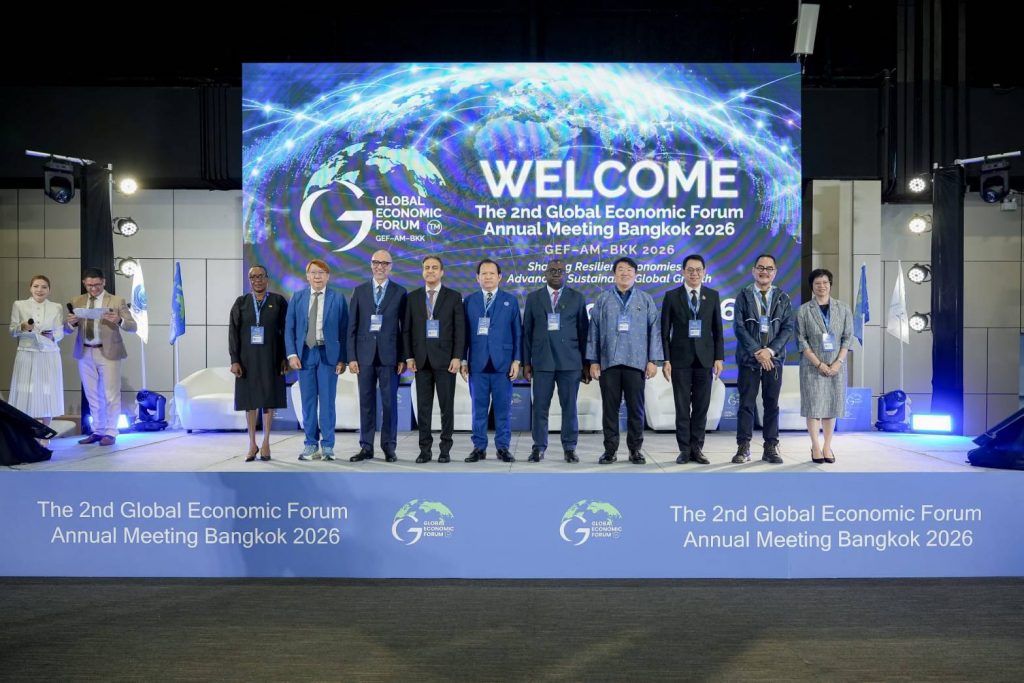
BANGKOK, THAILAND | 18 October 2026 — The 2nd Global Economic Forum Annual Meeting Bangkok 2026 (GEF-AM-BKK 2026) concluded its five-day programme, which was attended by 3,000 delegates across 50 countries with a compelling message: amid geopolitical fragmentation, technological disruption, and climate uncertainty, future prosperity will increasingly depend on infrastructure connectivity, sustainable investment, innovation, and international cooperation.
Held from 10–14 October at The Berkeley Hotel Pratunam under the theme “Shaping Resilient Economies – Advancing Sustainable Global Growth”, the forum convened policymakers, diplomatic representatives, investors, business leaders, academics, and industry innovators to examine the challenges and opportunities reshaping the global economy.
Four major themes emerged: Thailand’s infrastructure-led competitiveness, ASEAN’s potential as a global wellness innovation hub, financially viable and human-centric smart cities, and the need for greater economic cooperation amid geopolitical uncertainty.
Thailand’s Transport Infrastructure: Connecting ASEAN to Global Markets
Opening the forum, Mr. Siripong Angkasakulkiat, Thailand’s Deputy Minister of Transport, outlined the government’s commitment to strengthening transport infrastructure as a foundation for economic competitiveness, regional connectivity, and sustainable growth.
He highlighted investments in double-track and high-speed railways, motorway networks, Laem Chabang Port, and airport infrastructure, alongside greater private-sector participation in transport development. Thailand’s ambition to advance rail as a principal mode of national transport by 2030 was among the strategic priorities.
The Deputy Minister emphasised the importance of integrated transport networks in reducing logistics costs, attracting investment, and strengthening Thailand’s position as a regional economic and supply-chain hub. His address reinforced a wider economic proposition: infrastructure development must not merely connect destinations, but create opportunities for trade, industrial growth, and international investment.
Former Thai Minister: ASEAN’s Human Diversity Could Drive Global Wellness Innovation
A distinctive perspective emerged from Mr. Jakrabop Penkair, former Minister attached to Thailand’s Prime Minister’s Office, during the tourism and wellness discussions.
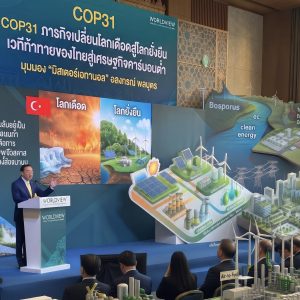
Mr. Jakrabop argued that ASEAN’s exceptional diversity of ethnicities, cultures, religions, and healthcare traditions represents an underutilised advantage for global wellness and healthcare innovation. Contrasting the region’s diversity with research conducted in more demographically homogeneous populations, he encouraged international wellness enterprises and researchers to consider ASEAN as a location for developing, evaluating, and refining products intended for diverse global markets.
His central proposition was that ASEAN’s human diversity could become a strategic economic asset, enabling businesses to better understand differences in health-related needs, consumer preferences, and cultural acceptance.
Smart Cities: Technology Must Be Investable and Serve Humanity
The panel on “Smart Cities, Intelligent Infrastructure & Sustainable Industrial Growth”, moderated by Dr. Victor Tay, Co-Chairman of GEF and Governing Council for China ASEAN Business Alliance, examined the convergence of artificial intelligence, intelligent infrastructure, sustainability, and investment.
Panellists discussed the practical and commercial dimensions of smart infrastructure, including the importance of financial viability and investment readiness. The outcome highlighted that smart cities should be designed around people’s needs rather than technology alone, with urban innovation enabling better living, accessibility, and community empowerment.
Dr. Tay, also Group CEO of Global Catalyst Advisory, challenged investors to consider environmental and societal outcomes alongside financial returns. “Every dollar of capital is a vote for the future,” he advocated, “we should consider not just Return on Investment (ROI) but Return on Planet (ROP).”
Global Trade and Peace: Resilience Must Not Become Isolation
The high-level discussion on “Global Trade, Geopolitics & Peace”, moderated by Dr. Victor Tay, brought together Dr. Andrei Rădulescu, Senior Researcher at the Institute for World Economy of the Romanian Academy, and Mr. NANA Emmanuel MBAFONG, Head of Collaboration with Emerging Economy. They highlighted rising sovereign debt and long-term fiscal pressures, particularly in major economies, and their implications for global economic stability.
The panel examined how geopolitical fragmentation, trade protectionism, and supply-chain realignment are reshaping globalisation, challenging governments to balance national security with economic openness.
Summarising the discussion, Dr. Tay urged: “Innovation without collaboration is invention; but innovation with collaboration becomes transformation. The future of global prosperity will not be determined by how effectively nations compete against one another, but by how wisely they learn to prosper together.”
Five Days of International Dialogue, Enterprise Engagement and Innovation
Organised by the Global Economic Forum with CHG Global Organization and its partners, under the leadership of Mr. Jacky Ong, Founder and Chairman of CHG Global Organization and Chairperson of GEF-AM-BKK, the forum combined strategic discussions with business networking, executive learning, and industrial exposure.
10 October – Opening Forum and Gala Dinner: The opening programme featured eight panel discussions spanning tourism, healthcare, investment, artificial intelligence, smart cities, infrastructure, sustainable industry, and international trade. Business matching, pitching, and networking facilitated potential commercial partnerships, followed by the GEF Gala Dinner and Awards.
11 October – GEF Talks and Knowledge Exchange: International speakers shared insights on innovation, leadership, business development, and emerging economic challenges, complemented by networking and recognition activities.
12–13 October – Executive Masterclasses: Specialist-led sessions addressed healthcare innovation, longevity, wellness, sustainability, and enterprise development, connecting professional knowledge with practical business applications.
14 October – Industrial Innovation Visit: Delegates visited the OD Innova Cosmec Innovation Center, examining manufacturing innovation, research and development, industrial competitiveness, and potential opportunities for collaboration.
The forum coincided with the period of the 2026 Annual Meetings of the International Monetary Fund and World Bank Group in Bangkok, providing a complementary platform for business and institutional perspectives on economic resilience.
Building Momentum Beyond Bangkok: GEF 2027
Reflecting on the gathering, Mr. Jacky Ong, Founder and Chairman of CHG Global Organization, emphasised the importance of sustaining international collaboration beyond the forum:
“GEF-AM-BKK 2026 has proven that cross-sector collaboration between governments, investors, and innovators is essential for building resilient economies. We extend our gratitude to all participating embassies, government ministries, and delegates for making this event an extraordinary success.”
“Our vision is for the Global Economic Forum to become a trusted bridge between ideas, capital and action, enabling leaders from different sectors and countries to turn meaningful dialogue into partnerships that create lasting value for economies and communities.”
The organising committee announced the next Global Economic Forum Annual Meeting in Bangkok from 22nd to 26 2027, followed by the GEF Summer Summit in Singapore from 28–29 November 2027.
As the Bangkok forum concluded, its message was clear: infrastructure connects markets, innovation expands possibilities, and capital accelerates development, but lasting prosperity depends on cooperation.
About the Global Economic Forum
The Global Economic Forum is an international platform bringing together policymakers, investors, business leaders, academics, and innovators to advance economic dialogue, enterprise development, and sustainable global growth through international cooperation.
Media Enquiries
Global Economic Forum Secretariat
Website: https://www.geconomicforum.org