
สิบกว่าปีที่ผ่านมา เราพูดถึง “ระบบคลาวด์” (Cloud) ราวกับมันเป็นสสารที่ไร้น้ำหนัก ล่องลอยอยู่ในอากาศและจับต้องไม่ได้ อย่างไรก็ดี “ความจริงทางกายภาพ” นั้น “คลาวด์” ไม่ใช่ไอน้ำก้อนเมฆ แต่มันคือคอนกรีต เหล็ก สายทองแดงนับล้านไมล์ที่เชื่อมต่อด้วยกัน การใช้งาน Cloud ประกอบด้วยการใช้น้ำนับล้านแกลลอนและกระแสไฟฟ้ามหาศาล ในช่วงหลัง
ผู้เขียนสนใจโลกยุค BANI และตั้งข้อสังเกตส่วนตัวว่านับแต่ปี 2025 นี้เราอยู่ในยุคที่เรียกว่า TIDE Era (Technology, Inequality, Disrupted Climate, และ Emerging Generations) ผู้เขียนมองว่าแรงขับเคลื่อนดังกล่าวกำลังหลอมรวมกันเพื่อกำหนดโลกใบใหม่ วันนี้ผู้เขียนหยิบประเด็นหนึ่งที่กำลังกลายเป็นจุดปะทะสำคัญของยุค TIDE นั่นคือ เรื่อง “ความย้อนแย้งทางคาร์บอนของ AI” หรือที่ภาษาอังกฤษใช้ว่า The Carbon Paradox of AI
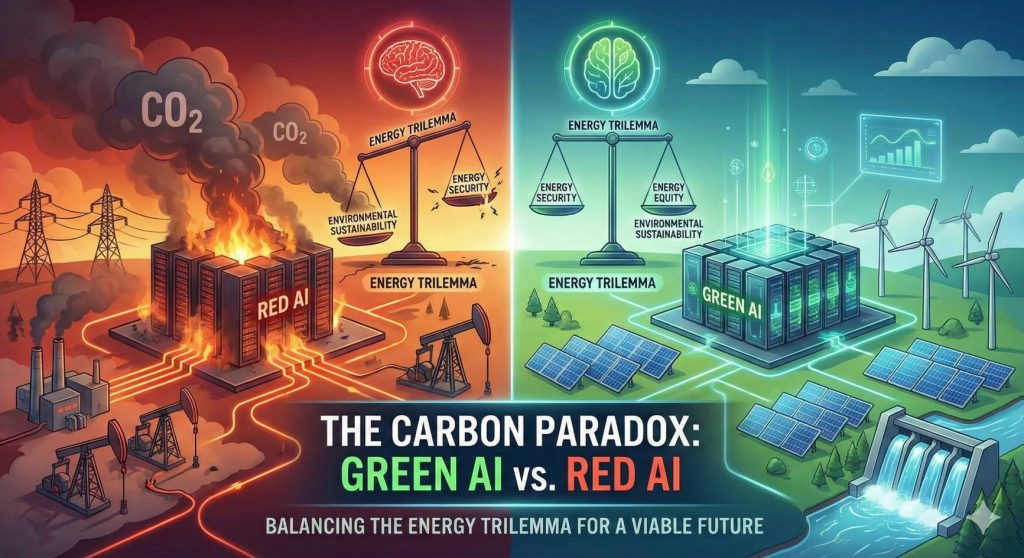
นับแต่เราเข้าสู่ยุค AI เต็มตัว ทุกประเทศกำลังวิ่งแข่งกันไปสู่อนาคตดิจิทัลที่ขับเคลื่อนด้วยปัญญาประดิษฐ์โดยหวังว่า AI ช่วยแก้ปัญหาประสิทธิภาพการทำงาน หรือแม้กระทั่งช่วยแก้ปัญหาโลกร้อน แต่ทว่า กระบวนการสร้างความอัจฉริยะนี้ เราต้องสร้าง Data Center ขนาดมหึมาที่กำลังสั่นคลอนความมั่นคงของโครงข่ายไฟฟ้า และอาจทำให้เป้าหมาย Net-Zero กลายเป็นเรื่องเพ้อฝัน สิ่งนี้นำเรามาสู่ “โจทย์สามเส้าทางพลังงาน” ที่เรียกว่า Energy Trilemma ความย้อนแย้งนี้เรียบง่ายแต่โหดร้าย เพราะ แทนที่ AI คือ เครื่องมือลดคาร์บอน แต่กระบวนการสร้างมันกลับปล่อยคาร์บอนมหาศาล
ในขณะนี้ นานาประเทศกำลังแข่งขันกันเพื่อดึงดูดการลงทุนสร้าง Data Center ระดับ Hyperscale เพื่อกระตุ้น GDP ดิจิทัล ภูมิภาคอาเซียน… เราเห็นเม็ดเงินลงทุนต่างชาติ (FDI) ไหลบ่าเข้าสู่ไทย มาเลเซีย และเวียดนาม แต่สิ่งอำนวยความสะดวกเหล่านี้ “กระหาย” ทรัพยากรอย่างหนัก (Energy Thirsty) Data Center ต้องการความเสถียรของไฟฟ้าแบบ 24/7 ซึ่งพลังงานหมุนเวียน (แสงอาทิตย์, ลม) เพียงอย่างเดียวยังไม่สามารถตอบโจทย์ได้หากปราศจากระบบกักเก็บพลังงานขนาดใหญ่ ผลลัพธ์ คือ เพื่อให้เซิร์ฟเวอร์ยังคงทำงานได้ หลายประเทศจำต้องหันกลับไปพึ่งพาโรงไฟฟ้าก๊าซธรรมชาติหรือถ่านหินสำรอง ตลกร้าย คือ เรากำลังเผาเชื้อเพลิงฟอสซิลเพื่อเทรน AI ที่วันหนึ่งอาจจะมาบอกวิธีเลิกเผาฟอสซิลแก่เรา ความไม่สมดุลนี้กำลังทำลาย Energy Trilemma หรือความสมดุลระหว่าง 3 ปัจจัยหลัก กล่าวคือ
หนึ่ง…Energy Security หรือ ความมั่นคงทางพลังงาน (มีไฟใช้พอเพียง)
สอง…Energy Equity หรือ ความเป็นธรรมทางพลังงาน (ราคาที่ประชาชนจ่ายไหว)
สาม…Environmental Sustainability หรือความยั่งยืนทางสิ่งแวดล้อม (ลดคาร์บอน)
คำถามคือ เมื่อ Data Center แห่งหนึ่งใช้ไฟฟ้าเท่ากับเมืองขนาดย่อมๆ สิ่งนี้กำลังเบียดเบียนความเท่าเทียม (Equity) ของชาวบ้านที่อาจต้องเจอกับไฟตกหรือค่าไฟที่แพงขึ้นหรือไม่? และท้ายที่สุดเรากำลังสูญเสียความยั่งยืนไป (Sustainability) ในอดีต ผู้ตรวจสอบอาจดูแค่งบการเงินของรัฐวิสาหกิจด้านไฟฟ้า แต่วันนี้มุมมองการตรวจสอบภาครัฐขยายไปสู่ความเข้าใจระบบนิเวศทางเศรษฐกิจและสังคมมากขึ้น เรายังต้องการ Data Center มาช่วยขับเคลื่อนเศรษฐกิจสมัยใหม่ แต่รูปแบบ วิธีการขับเคลื่อนอย่างไรที่รักษาสมดุลของ Energy Trillemma นับเป็นโจทย์ที่ท้าทายมาก โดยเฉพาะปมเรื่อง Carbon Paradox of AI องค์กรตรวจเงินแผ่นดิน (SAI) อยู่ในจุดยุทธศาสตร์ที่จะเชื่อมช่องว่างระหว่าง “นโยบายที่สวยหรู” กับ “ความเป็นจริงหน้างาน”
ผู้เขียนได้รวบรวมมุมมองต่าง ๆ ที่ SAI สามารถช่วยออกแบบคลี่คลายปม Carbon Paradox ดังนี้
หนึ่ง…การตรวจสอบผลสัมฤทธิ์ของ “มาตรการจูงใจทางดิจิทัล” (Performance Auditing of Incentives)
แน่นอนว่ารัฐบาลมักเสนอมาตรการลดหย่อนภาษีหรือที่ดินเพื่อดึงดูด Tech Giants ทาง SAI สามารถตั้งคำถามว่าสิทธิประโยชน์เหล่านี้มาพร้อมกับเงื่อนไขด้านสิ่งแวดล้อมหรือไม่ ? ในมิติการตรวจสอบของสากลนั้นมักตั้งคำถามถึงหน่วยงานส่งเสริมการลงทุนว่าได้บังคับใช้เกณฑ์ “Green Energy” กับนักลงทุนเหล่านี้จริงหรือไม่ โดยเราต้องคำนึงว่าเราไม่ได้แค่ปั่นตัวเลข GDP ให้สูง แต่กลับสร้างความเสียหายทางสิ่งแวดล้อมมหาศาล การตรวจสอบที่สร้างสรรค์ย่อมช่วยชี้ให้เห็นว่าผลตอบแทนทางเศรษฐกิจนั้นคุ้มค่ากับต้นทุนทางสิ่งแวดล้อมที่เสียไปหรือไม่ อย่างไร
สอง…การประเมินความพร้อมของ “กริดสีเขียว” (The Green Grid Assessment) SAI ที่ตรวจสอบรัฐวิสาหกิจด้านพลังงานต้องประเมินความพร้อมของโครงข่ายไฟฟ้า หากประเทศมีนโยบายเปิดรับ Data Center เต็มตัว แต่รัฐวิสาหกิจไฟฟ้ายังไม่ได้อัปเกรดสายส่งหรือเพิ่มสัดส่วนพลังงานสะอาด…SAI สามารถเสนอแนะให้มั่นใจว่า แผนแม่บทดิจิทัล และ แผนแม่บทพลังงาน กำลัง “คุยภาษาเดียวกัน” ไม่ใช่ต่างคนต่างทำ (Silo)
สาม…การตรวจสอบอัลกอริทึม (The Green AI Audit)…นี่คือน่านน้ำใหม่ของ SAI ณ วันนี้เราเริ่มเห็นแนวคิดเรื่อง “Green AI” vs “Red AI กันบ้างแล้ว Red AI นั้น มุ่งเน้นผลลัพธ์ที่เป็นเลิศโดยใช้โมเดลขนาดใหญ่ที่กินพลังงานมหาศาล ในทางกลับกัน Green AI ให้ความสำคัญกับประสิทธิภาพการใช้พลังงาน แม้ SAI ไม่ได้ตรวจสอบบริษัทเทคโนโลยีโดยตรง แต่เราตรวจสอบการจัดซื้อจัดจ้างภาครัฐ เมื่อภาครัฐต้องจัดซื้อระบบ AI ทาง SAI ควรเสนอแนะให้มีเกณฑ์การคัดเลือกที่เหมาะสมต่ออัลกอริทึมที่ประหยัดพลังงาน เพื่อสร้างมาตรฐาน “การจัดซื้อจัดจ้าง AI อย่างรับผิดชอบ” (Responsible AI Procurement)
กล่าวโดยสรุปแล้ว การตรวจสอบของโลกยุค BANI หรือยุค TIDE ก็ดี คือ การตรวจสอบที่ “เท่าทันอนาคต” (Adaptive Auditing) ผู้ตรวจสอบในศตวรรษที่ 21 กำลังขยับไปสู่การตรวจสอบที่เน้นการมองไกลและสามารถออกแบบอนาคตการใช้ทรัพยากรรัฐได้ (Foresight Mechanism) การเติบโตของ AI เป็นสิ่งที่หลีกเลี่ยงไม่ได้และมีประโยชน์มหาศาล แต่เราคงปล่อยให้การเปลี่ยนผ่านสู่ดิจิทัลมาทำลายด้านสิ่งแวดล้อมเหมือนในอดีตไม่ได้อีกแล้ว การตรวจสอบแบบ Performance Audit ชี้ให้เห็นถึงแรงเสียดทานใน Energy Trilemma โดยองค์กรตรวจเงินแผ่นดินสามารถผลักดันให้เกิดบทสนทนาที่สร้างสรรค์ระหว่าง ผู้กำหนดนโยบาย ผู้ผลิตไฟฟ้า และนักลงทุนได้ เราต้องมั่นใจว่า “ความอัจฉริยะ” ที่เรากำลังสร้างขึ้นนั้น ไม่ใช่แค่ของเทียม (Artificial) แต่ต้องยั่งยืน (Sustainable) ด้วย เพราะคำถามสำคัญสำหรับพวกเราในวันนี้ ไม่ใช่แค่ “ตัวเลขถูกต้องหรือไม่?” แต่คือ “อนาคตของเราจะอยู่รอดหรือไม่?”
บทความโดย Dr. Sutthi Suntharanurak 6 ก.พ.69
https://thailandtoday2020news.blogspot.com/2026/02/ai-energy-trilemma.html
The Invisible Cost of Intelligence: AI, the Energy Trilemma, and the Auditor’s Dilemma
We often speak of the “Cloud” as if it were weightless—a nebulous, ethereal space where our data lives. But as an auditor, I look for the physical reality behind the metaphor. The Cloud is not vapor; it is concrete, steel, miles of copper wire, and, increasingly, millions of gallons of water and gigawatts of electricity.
In my recent writings on the TIDE Era (Technology, Inequality, Disrupted Climate, and Emerging Generations), I highlighted how these forces converge to reshape our world. Today, I want to zoom in on a specific friction point within that era: The Carbon Paradox of AI.
We are racing toward a digital future powered by Artificial Intelligence, promising to solve efficiency problems and even climate change itself. Yet, to build this intelligence, we are constructing massive data centers that threaten to destabilize our energy grids and derail our net-zero targets.
This brings us to the Energy Trilemma—and the critical, often overlooked role that Supreme Audit Institutions (SAIs) must play in solving it.
The Carbon Paradox: When “Green” Tech Demands “Grey” Power The paradox is simple but brutal: AI is a tool for decarbonization, but its creation is carbon-intensive. Nations are competing to host the next hyperscale data centers to boost their digital GDP. In Southeast Asia, we see a rush of FDI (Foreign Direct Investment) into Thailand, Malaysia, and Vietnam. But these facilities are thirsty. They demand 24/7 power stability that renewables (solar, wind) cannot yet fully guarantee without massive battery storage.
Consequently, to keep the servers running, many grids are quietly turning back to natural gas or coal reserves. We are, in effect, burning fossil fuels to train AI models that might one day tell us how to stop burning fossil fuels. This imbalance disrupts the Energy Trilemma, the delicate balance between: Energy Security: (Reliability), Energy Equity:(Affordability for citizens), and Environmental Sustainability: (Low carbon)
When a data center consumes as much electricity as a small city, does it compromise the equity of local villagers who might face blackouts or rising tariffs? Does it sacrifice sustainability for the security of the digital economy?
The “Auditonomist” View: How SAI Can Contribute In the past, auditors might have looked only at the financial statements of a state-owned utility. Today, that is not enough. As “Auditonomists”—auditors who understand the economic and social ecosystem—we must expand our scope.
Supreme Audit Institutions (SAIs) are uniquely positioned to bridge the gap between policy ambition and ground reality. In my humble view, I propose how SAIs can dismantle the Carbon Paradox:
Get Sutthi Suntharanurak’s stories in your inbox Join Medium for free to get updates from this writer.
1. Performance Auditing of “Digital Incentives” Governments often offer tax breaks and land deals to attract tech giants. SAIs must ask: Do these incentives come with environmental strings attached ? We must audit whether the Board of Investment (BOI) or relevant agencies are enforcing “Green Energy” requirements on these investors. Are we importing GDP but exporting environmental damage? An audit can reveal if the economic gain justifies the environmental cost.
2. The “Green Grid” Assessment SAIs responsible for auditing state-owned energy enterprises must assess the grid’s readiness. If a country creates a policy to welcome data centers, but the state utility has not upgraded its transmission lines or renewable capacity, we face a strategic misalignment. SAIs can issue recommendations to ensure that the Digital Master Plan and the Energy Master Plan are talking to each other, not working in silos.
3. Auditing the Algorithm (The “Green AI” Audit) This is a frontier for SAIs. We are beginning to see the concept of “Green AI” vs. “Red AI.” Red AI pursues state-of-the-art results by training massive models that consume immense energy. Contrary, Green AI prioritizes efficiency. While SAIs may not audit private tech firms directly, we do audit government procurement. When the public sector buys AI solutions, SAIs should recommend criteria that favor energy-efficient algorithms. We can set the standard for “Responsible AI Procurement.” A Call for “Adaptive” Auditing In my view, an auditor in the 2020s cannot simply be a “checker” of receipts. We must be a foresight mechanism for the state.
Definitely, the growth of AI is inevitable, and its benefits are undeniable. But we cannot let the digital transformation cannibalize our environmental commitments. By using performance audits to highlight the friction in the Energy Trilemma, SAIs can force a necessary conversation between policymakers, utility providers, and tech investors.
We must ensure that the “intelligence” we build is not just artificial, but also sustainable. The question for us today is not just “Is the data accurate?” but “Is the future viable?”
Dr. Sutthi Suntharanurak
https://thailandtoday2020news.blogspot.com/2026/02/ai-energy-trilemma.html