

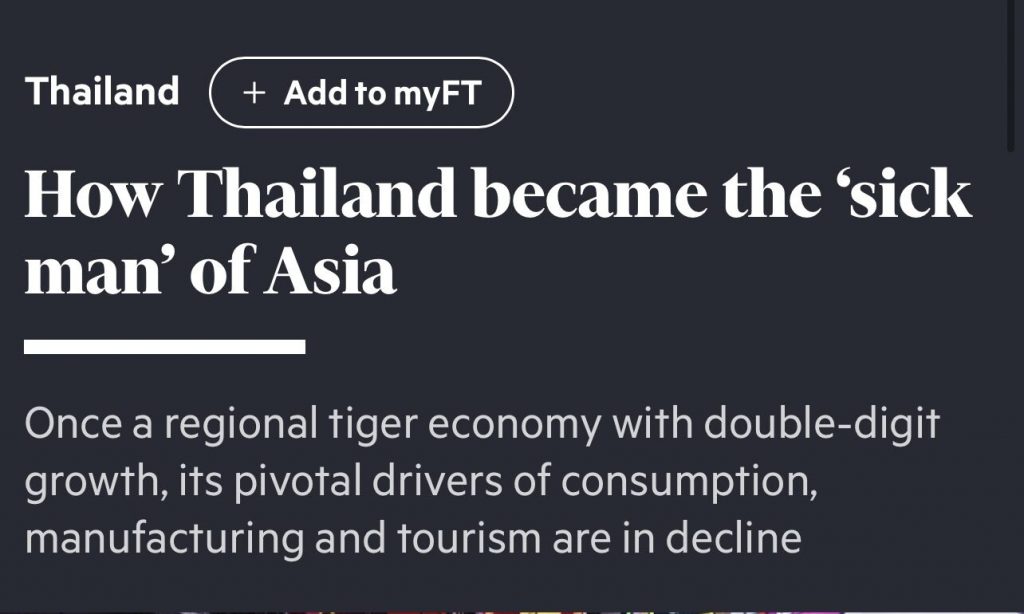
Financial Times ตีพิมพ์บทความกล่าวถึงเศรษฐกิจไทย เนื้อหาบทความระบุไว้ดังนี้ว่า ย้อนกลับไปในปี พ.ศ. 2531 เศรษฐกิจของประเทศไทยเคยเติบโตและพุ่งทะยานถึง 13% จนได้รับการขนานนามว่าเป็น “เสือแห่งเอเชีย” อย่างไรก็ตาม ภาพจำเหล่านั้นกำลังเลือนลางหายไป ปัจจุบันไทยติดอยู่ในภาวะโตต่ำ เฉลี่ยเพียงแค่ 2% มาตลอด 5 ปี และในปีนี้ รัฐบาลยังคงคาดการณ์ว่าเศรษฐกิจไทยจะโตเพียงแค่ 2% ขณะที่ IMF คาดการณ์อาจโตได้เพียง 1.6% ซึ่งถือว่ารั้งท้ายในบรรดาประเทศเพื่อนบ้านในอาเซียน
ผู้เชี่ยวชาญรายหนึ่งได้ให้ความเห็นไว้กับ Financial Times อย่างน่าสนใจว่า “ประเทศไทยเคยถูกมองว่าสดใส แต่ปัจจุบัน กลับกลายเป็นคนป่วยของเอเชียภายในระยะเวลาเพียง 10 ปี”
Financial Times ระบุว่า สาเหตุหลักมาจากปัญหาเชิงโครงสร้าง ทั้งเรื่องสังคมสูงวัยที่รวดเร็ว ประชากรลดลงต่อเนื่อง โดยในปี 2568 ที่ผ่านมา อัตราการเกิดของประเทศไทยตกต่ำที่สุดในรอบ 75 ปี และที่น่ากลัวที่สุดคือ “หนี้ครัวเรือน” ที่สูงเกือบ 90% ของ GDP ติดอันดับต้นๆ ของเอเชีย ทำให้คนไทยไม่มีกำลังซื้อและต้องรัดเข็มขัดการใช้จ่ายกันอย่างหนัก จนบรรยากาศตามร้านอาหารหรือแหล่งช้อปปิ้งเริ่มเงียบเหงา ร้านค้าต้องปิดตัวลง ฟากการผลิตก็น่าห่วงไม่แพ้กัน อุตสาหกรรมรถยนต์ที่เคยเป็นความภูมิใจ วันนี้ค่ายยักษ์ใหญ่อย่าง ฮอนด้า ซูซูกิ และนิสสัน เริ่มปิดโรงงานหรือลดกำลังผลิตลง เพราะสู้ต้นทุนไม่ไหว และถูกซ้ำเติมด้วยสินค้าราคาถูกจากจีน รวมถึงการแข่งขันที่รุนแรงจากเวียดนาม ขณะที่ความหวังอย่างการท่องเที่ยวก็ยังไม่กลับไปจุดเดิม ปีที่ผ่านมา ไทยมีนักท่องเที่ยวต่างชาติ 32.9 ล้านคน ลดลง 7% จากปีก่อนหน้านี้ และยังต่ำกว่าช่วงก่อนโควิดที่เคยทำได้ถึง 40 ล้านคน
นอกจากนี้ ยังมีประเด็นเรื่องความปลอดภัยจากปัญหาสแกมเมอร์ที่เกิดขึ้นในช่วงปีที่ผ่านมา และการแข่งขันจากประเทศอย่างญี่ปุ่นและเวียดนามที่ดึงดูดนักท่องเที่ยวไปแทน อย่างไรก็ดี Financial Times ระบุว่า ตัวฉุดรั้งเศรษฐกิจไทยที่สำคัญคือ “ความไม่แน่นอนทางการเมือง” ไทยมีการเปลี่ยนนายกรัฐมนตรีบ่อยครั้งในช่วงไม่กี่ปีที่ผ่านมานี้ ความขัดแย้งระหว่างกลุ่มอำนาจเดิมกับพรรคปฏิรูปทำให้งบประมาณและการผลักดันนโยบายขาดความต่อเนื่อง นักลงทุนขาดความเชื่อมั่น ขณะเดียวกัน การขาด “เครื่องยนต์ใหม่” มาผลักดันอุตสาหกรรมใหม่ๆ เช่น Data Center, การผลิตสินค้ามูลค่าสูง, ยา, และเทคโนโลยีชีวภาพ รวมถึงนโยบายกำแพงภาษีและการกีดกันทางการค้าจากสหรัฐฯ ก็เป็นส่วนหนึ่งที่ฉุดรั้งการเติบโตเศรษฐกิจของไทย ประเด็นเศรษฐกิจทั้งหมดนี้ จึงกลายเป็นโจทย์ใหญ่ในการเลือกตั้งทั่วไป ในวันอาทิตย์ที่ 8 กุมภาพันธ์นี้ ผู้สมัครจากหลายๆ พรรคการเมืองต่างก็ประกาศว่าจะเข้ามาฟื้นฟูเศรษฐกิจและเสถียรภาพของประเทศ
บทสรุปจากเหล่านักเศรษฐศาสตร์ยืนยันตรงกันว่า เศรษฐกิจไทยตอนนี้ไม่ได้อยู่ในห้อง ICU แต่ถ้าไม่รีบผ่าตัดโครงสร้างเศรษฐกิจตอนนี้ จาก “คนป่วย” อาจกลายเป็น “คนไข้อาการโคม่า” ในอนาคตอันใกล้
สื่อต่างประเทศรายงานว่า จากเสือเศรษฐกิจ เศรษฐกิจไทยได้กลายสภาพสู่ “คนป่วยแห่งเอเชีย” ที่ติดกับดักเติบโตต่ำแค่ 2% มานานกว่า 5 ปี จากทั้งภาวะการเมืองที่ผันผวน ปัญหาเชิงโครงสร้าง และเครื่องยนต์เศรษฐกิจที่อ่อนแรงลงพร้อมกัน ปัจจุบัน ไทยต้องเผชิญปัญหาเชิงโครงสร้างซ้อนทับหลายด้าน ทั้งหนี้ครัวเรือนที่พุ่งใกล้ 90% ของ GDP ประชากรที่หดตัวต่อเนื่อง อัตราการเกิดที่ต่ำสุดในรอบ 75 ปี ทำให้ไทยเข้าสังคมสูงวัยอย่างรวดเร็ว และตลาดหุ้นที่ให้ผลตอบแทนแย่ที่สุดในเอเชีย ขณะที่ตลาดอสังหาฯ ตกต่ำสุดในรอบ 30 ปี
นอกจากนี้ เครื่องยนต์เศรษฐกิจทั้ง 3 ด้านของไทย คือ ภาคการผลิต การบริโภค และภาคการท่องเที่ยว ยังอ่อนแรงพร้อมกัน โรงงานยานยนต์รายใหญ่อย่างนิสสัน ฮอนด้า ซูซูกิ ปิดตัวหรือลดกำลังผลิต ผู้บริโภครัดเข็มขัด ขณะที่จำนวนนักท่องเที่ยวต่างชาติลดลง และยังต่ำกว่าก่อนโควิดที่เคยแตะ 40 ล้านคน
https://www.ft.com/content/e766f94f-7626-4b60-b997-44ca1b18a4e7


“How Thailand became the ‘sick man’ of Asia” means “how Thailand became a ‘sick person’ of Asia. ” Financial Times
The Financial Times published an article describing the Thai economy. The content of the article states as follows: Back in the year Nov. In 1988, Thailand’s economy used to grow and soar by 13% until it was dubbed the “Tiger of Asia.” However, these memories are fading. Currently, Thailand has experienced low growth of only 2% over the past five years. This year, the government still expects the Thai economy to grow only 2% while the IMF projects only 1.6%, which is the last among ASEAN neighbors.
One expert commented interestingly to the Financial Times, “Thailand used to be considered bright, but now it has become a patient in Asia in just 10 years.”
The Financial Times attributed the structural problems to the fast aging society and the declining population. In 2025, Thailand’s birth rate was the lowest in 75 years and the most feared “household debt” of almost 90% of Asia’s GDP, causing Thais to have no purchasing power and have to tighten their spending belts. The atmosphere in restaurants and shopping centres has become bleak. Manufacturing is just as worrisome. The former auto industry, such as Honda, Suzuki and Nissan, has shut down production facilities and reduced production costs due to lower costs and reduced competition from China and Vietnam. Meanwhile, the hope of tourism has not yet returned. Last year, Thailand had 32.9 million foreign tourists, down 7% from the previous year, which is still lower than the previous period of 40 million.
In addition, safety issues from the scammers that occurred last year and how competition from countries such as Japan and Vietnam attracted tourists. The Financial Times noted that the major drag on the Thai economy is “political uncertainty.” Thailand has changed its prime minister frequently in recent years. Conflicts between the former and the reformist parties have led to a lack of budget and policy drive, while lack of “new engines” to drive new industries such as Data. Center, high-value production, pharmaceuticals and biotechnology, as well as tariff barriers and trade barriers from the U.S. are hampering Thailand’s economic growth. All these economic issues have become major challenges in the February 8 general elections.
The economists’ conclusion confirmed that the Thai economy is not in the ICU right now, but if not in a hurry, the economic structure now from the “sick” could become a “coma patient” in the near future.
Foreign media reported that the Thai economy has become a “sick person of Asia” who has been trapped at 2% growth for more than 5 years due to political volatility, structural problems and weakening economic engines. Currently, Thailand faces many structural problems, including household debt that is close to 90% of GDP, and population that continues to contract. The lowest birth rate in 75 years has prompted Thailand to quickly enter the aging society and the worst stock market in Asia, while the real estate market has bottomed out in 30 years.
In addition, Thailand’s three economic engines – manufacturing, consumption and tourism – were weak at the same time. Major automotive plants such as Nissan Honda Suzuki – shut down or cut back on their belt-tightening, while the number of foreign tourists dropped and still fell short of the 40 million mark before Covid.
https://thailandtoday2020news.blogspot.com/2026/02/financial-times-how-thailand-became.html